

Browser games are popular again thanks to instant access, cross-platform play, and short sessions; Chicken Road shows how simple mechanics keep players engaged.
The digital entertainment market has changed dramatically in recent years. Mobile platforms have pushed consoles aside, while browser-based projects have gained a second life. One such project is the Chicken Road game — an engaging arcade game that runs directly in the browser without installation. Games like this attract players who value quick starts and short play sessions.
What Has Changed in the Browser Game Industry
Ten years ago, browser games were associated with primitive graphics and Flash animation. The emergence of WebGL technology and modern frameworks has erased that boundary. Today, developers create products that visually rival native applications but do not require downloading.
The growing popularity can be explained by several factors:
- Low entry barrier — the game launches within seconds.
- Cross-platform compatibility — the project runs on laptops, tablets, and smartphones.
- Minimal system requirements — no expensive hardware is needed.
- Short sessions — a convenient format for quick breaks between tasks.
These qualities have created a stable audience that prefers instant access to content instead of long loading times.
Mechanics and Features of Chicken Road
The concept is based on a familiar storyline: a chicken crosses a road while avoiding obstacles. Behind the apparent simplicity lies a well-designed progression system that holds the player’s attention longer than it might seem at first glance.
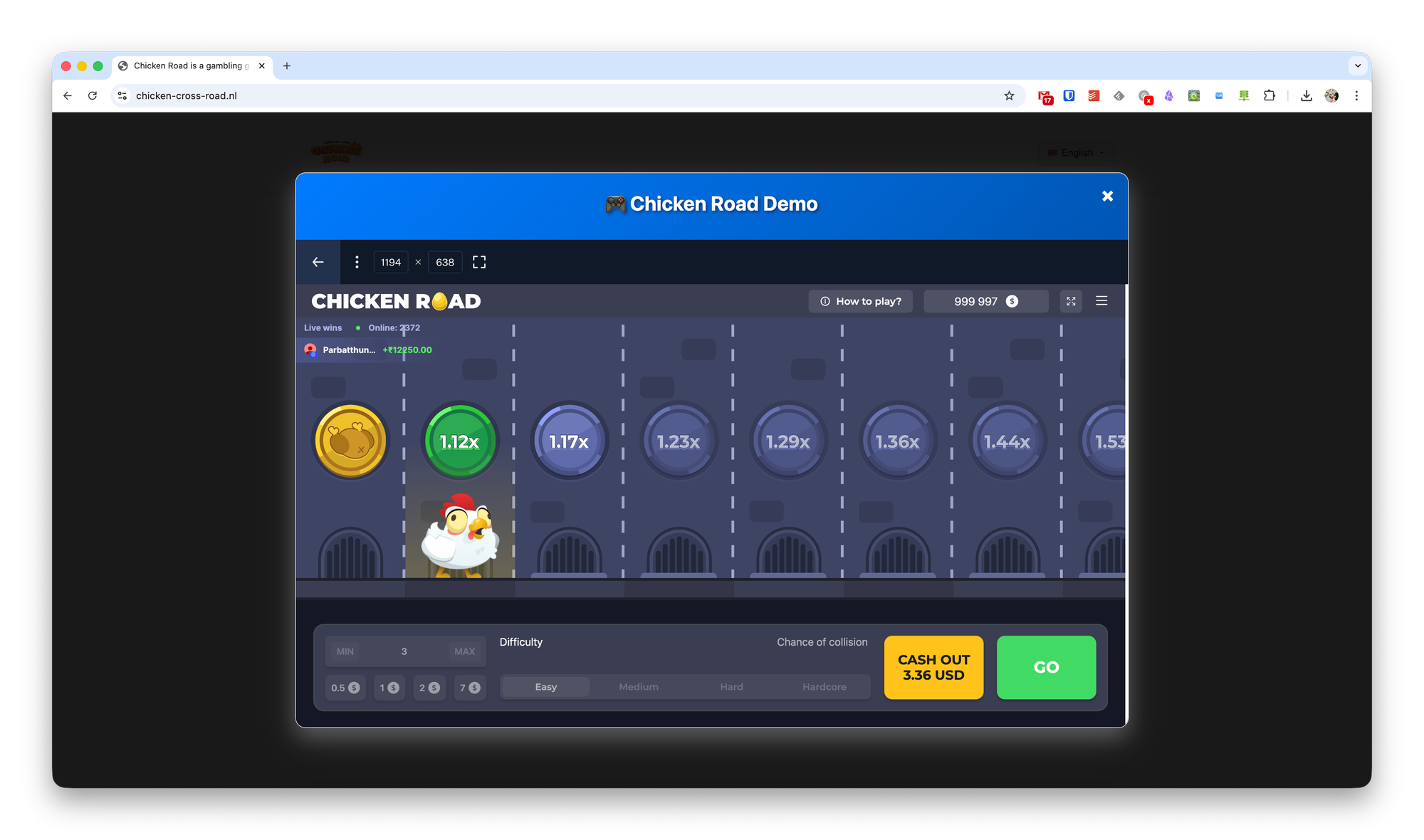
The main advantage of Chicken Road is its instant feedback. Players immediately see the result of each decision, which creates a sense of control over the process.
The gameplay relies on three principles. Each round is unique because the obstacle layout is generated randomly. The multiplier system rewards boldness: the farther a player advances, the higher the potential reward. The decision of when to stop is made by the player, and the balance between risk and caution creates the tension that makes the mechanic engaging.
Who Short Browser Sessions Are For
The instant-launch format attracts different categories of users. Analysis of behavioral patterns shows that the core audience consists of three main groups:
- Office workers who switch to a five-to-ten-minute session during lunch breaks.
- Students who fill gaps between lectures with light entertainment.
- Fans of casual mechanics who enjoy the process itself rather than deep storylines.
Their common trait is a limited time budget and a reluctance to deal with complex interfaces. Browser projects meet exactly this need.
How to Choose a Quality Browser Game
The market is oversaturated with similar clones, and it is not always easy to distinguish a worthwhile product from a low-quality one. When choosing, it is useful to rely on specific criteria:
- Transparent mechanics. The rules should be clear from the first minute without reading guides.
- Stable performance. The absence of lags and crashes is a basic quality indicator.
- Responsive design. The interface should display correctly on screens of different sizes.
A project that meets these parameters is highly likely to provide a comfortable gaming experience without unpleasant surprises.
Browser gaming has long outgrown its status as a temporary hobby. The technology has grown, the audience has formed, and developers have learned to create compact products with well-designed mechanics. Chicken Road proves that to captivate a player, it is not necessary to build a massive world—precise mechanics, fair rules, and instant access are enough.